Research Digest
Gen Z Takes Over the Living Room: What This Means for Advertisers
by Melissa Yap
Abstract
- On average over 75% of 12 to 34 year olds spend the majority of their TV time on streaming, highlighting the opportunity for advertisers wanting to get in front of this demographic.
- There is a shift to “casual viewing” within this demographic, and streaming networks like Netflix are even adapting their content to match this viewing behavior, prompting advertisers to reconsider how to position their ad creative to stand out.
- The living room is evolving with Gen Z’s viewing habits as the lines blur between the “first” and “second” screen, but Connected TV bridges this gap as it transcends across mobile devices, tablets, and the television screen.
Love them or loathe ‘em, Generation Z is shaking things up. As the first digitally native generation, they’ve grown up with the internet and smartphones, spending their days shifting between screens, apps, and devices to seek, inform, and build their online identities. Entering adulthood, they’re also gaining some serious buying power and reshaping the way brands market and advertise to them. Below, we explore what this means for marketing strategies and why advertisers who have traditionally relied on paid search and social media to reach Gen Z should follow this audience to the big screen.
What the “First” and “Second” Screen Looks Like for Gen Z
When we did an initial deep dive on this generation, research revealed that almost half (46%) of Gen Z’s consumed long-form TV content regularly. But how does this viewing behavior net out today?
As Gen Z ages and moves out of home, we’re now seeing an increased ownership of the remote control, and in turn the living room. According to Pew research, 82% of 25-34-year-olds no longer live with their parents. And Connected TV makes up a big part of their TV viewing habits.
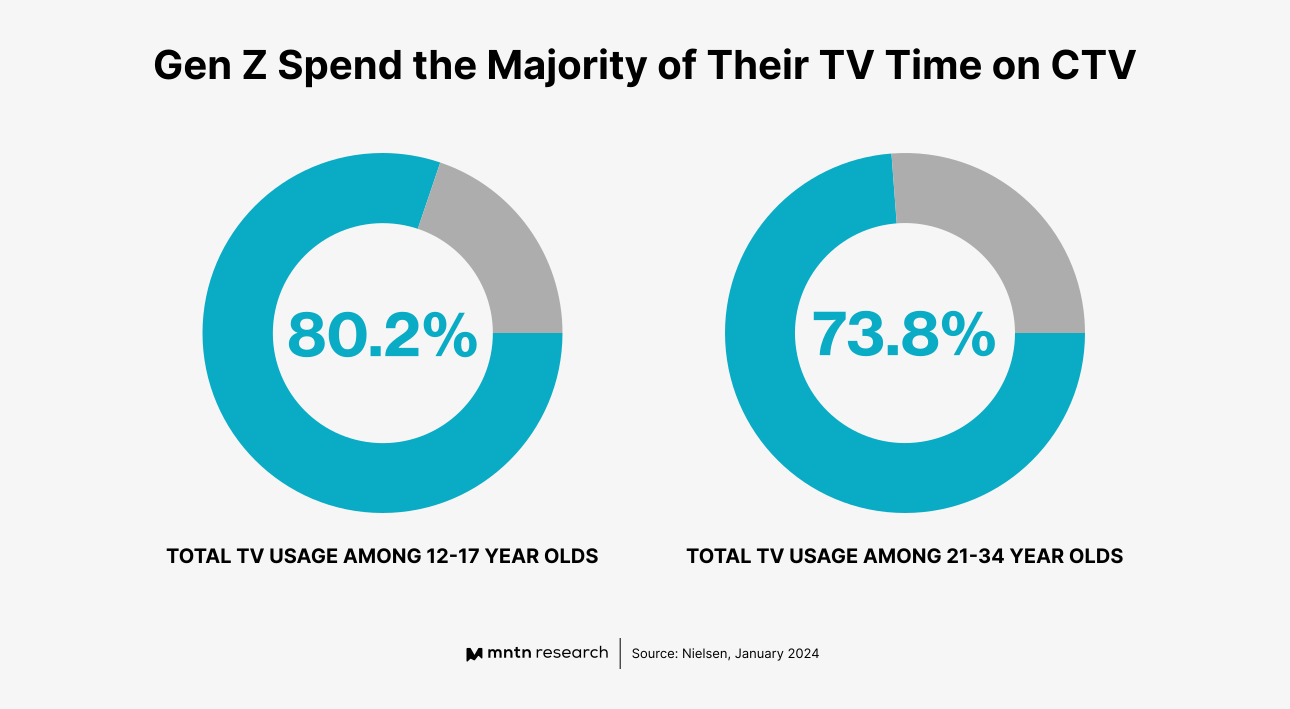
Gen Z are also taking the word ‘multi-tasking’ to another level. Over three-quarters (84%) of this generation admitted to streaming shows and movies while working from home. And when they need a brief respite from the day, 59% stream, followed by listening to music (50%), and scrolling on social media (38%).
Aside from how much they stream, this is still a mobile-first generation, with 92% of them owning smartphones. Unlike previous generations, whose main device for media consumption was television, Gen Z prioritizes content on their phones, with streaming TV acting as their second screen. But is there really such a thing as a “first” and “second” screen anymore, especially when the flexibility of streaming platforms enables content to be watched across multiple devices, like phones and tablets?
The living room isn’t confined to one space anymore, which is something that’s prevalent across audiences of all generations. We carry our phones and devices wherever we go, and in turn take the living room with us, too. For advertisers, this means it’s a battle for winning over Gen Z’s on both screens simultaneously, instead of thinking of screentime viewing as something that’s approached in sequence.
The Rise of Casual Viewing and Bite-Sized Content
Cross-device viewing hasn’t only split attention spans — for Gen Z specifically, it’s reshaped the types of content that resonate with them. While streaming is firmly established in their consideration set, bite-sized content on social video platforms like YouTube and TikTok has stolen their attention, at least for a little while. “Microdramas” are the newest trend on these platforms (1-2 minute scripted episodes), with 28 million adults — 52% of those aged 18-34 — tuning in.
Publishers are catching on and adapting their content accordingly. A recent essay by Will Tavlin released on culture magazine n+1, explored how streaming networks like Netflix are tailoring their content to this audience. “Several screenwriters who’ve worked for the streamer told me a common note from company executives is, “have this character announce what they’re doing so that viewers who have this program on in the background can follow along…usually reserved for breezy network sitcoms, reality television, and nature documentaries, the category describes much of Netflix’s film catalog — movies that go down best when you’re not paying attention.”
Let’s think about the implications this will have for advertisers. Beyond a need for authenticity and realness, there is also a necessity to adapt ad creative, and have multiple versions at their disposal. This includes exploring high-contrast visuals or a compelling voice-over/script on CTV commercials to stand out. Additionally, experimenting with interactive formats that capture attention without disrupting the overall viewer experience, like pause ads, can turn a moment of distraction into an opportunity for action.
The Convergence of CTV, the Creator Economy, and Gen Z
If Gen Z has redefined what “first” and “second” screens even mean, they’ve also recast who gets their attention on those screens. Deloitte’s 2025 Digital Media Trends survey shared that 56% of Gen Z believe that the creator economy holds more cultural cachet than actors on film and TV, and about half of them are willing to follow them across devices.
Turns out it’s not only Santa Claus who is making lists and checking them twice. According to financial and investment publication Barrons, U.S. web traffic was up 21% in the first 36 hours of Prime Day versus the previous five days, as shoppers browsed and shortlisted their purchases. But what about the time frame leading up to this?
We analyzed MNTN Performance TV data in the 2-week period before Prime Day, and saw a rise in both visits and conversions in this time period.
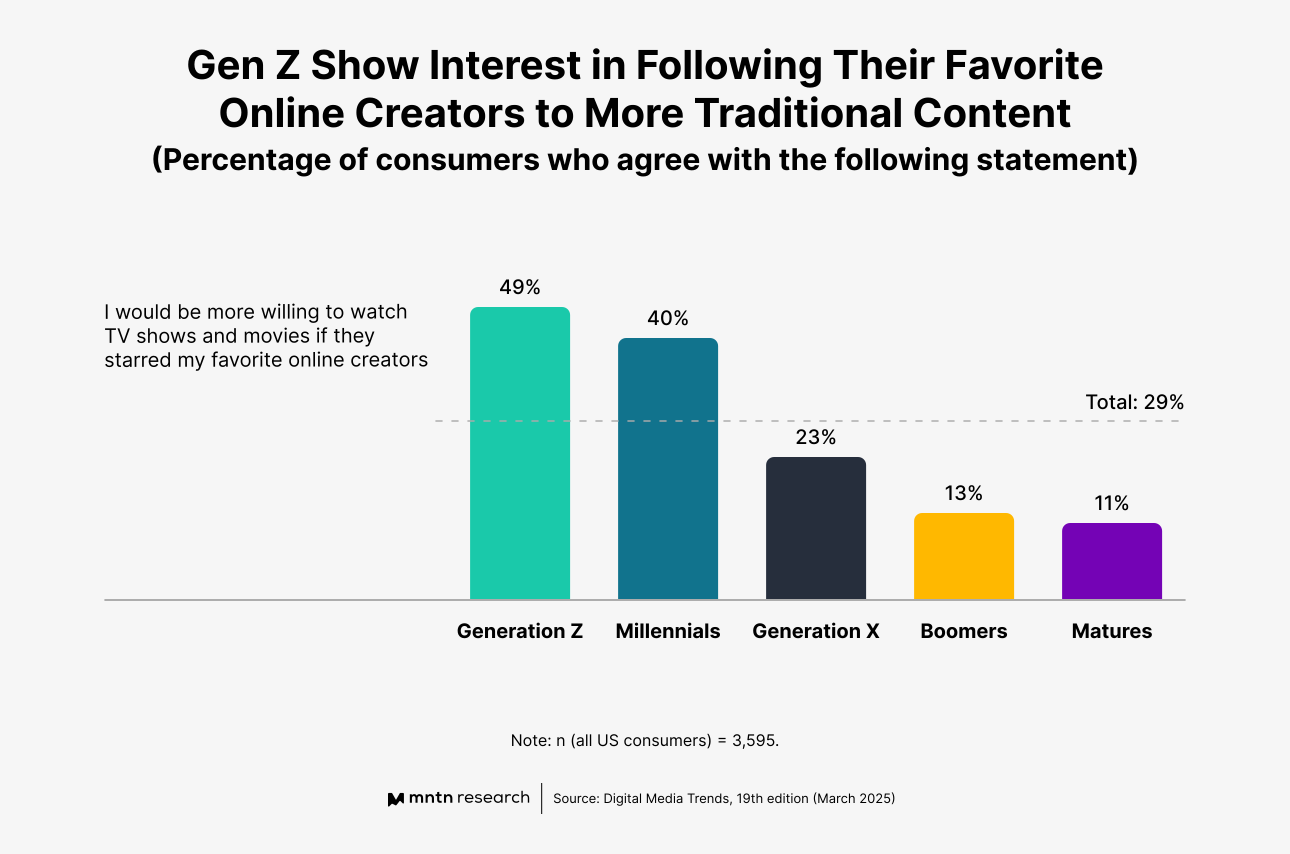
As Gen Z takes the living room with them wherever they go, creators are coming along for the ride, and moving into formats (and devices) that mirror Gen Z’s media consumption habits. Think: episodic content, collaborative series, longer-form storytelling, and branded entertainment that feels less like a 15-second social clip and more like a complete narrative. If Gen Z streams while working, swaps between social video and long-form shows, and treats screens interchangeably, then the leap from following a creator on TikTok to watching a creator-driven series on their TV is increasingly seamless. The living room is no longer a separate zone from the social world — it’s another surface for the same cultural landscape. This convergence offers a new way to reach Gen Z at the exact moment when their attention is most focused. It doesn’t mean replicating social content on CTV; it’s about taking the DNA of creator-led communication — authenticity, cultural fluency, community — and adapting it to the big screen where visuals are larger, narratives are longer, and ad formats can work harder.
For marketers trying to reach an audience that is always multitasking, always toggling, and always sussing out whether something feels real, creator-led CTV experiences offer an opportunity to show up with relevance across both screens simultaneously.
Subscribe to the MNTN Research Weekly
Sign up to receive a weekly feed of curated research, sent straight to your inbox.
Resources
1 5 Ways to Win Gen Z’s Hearts with CTV Ad Creative (MNTN Research)
2 Amid the Fragmented TV Landscape, Time Spent With Content Is the Best Planning Data There Is (Nielsen)
3 Gen Z Admits To Binge-Watching Shows and Movies at Work (Axios)
4 Gen Z Watching TV: A Myth or Reality? (EssenceMediacom)
6 Casual Viewing: Why Netflix Looks Like That (n+1)
7 The Shares of Young Adults Living With Parents Vary Widely Across the U.S. (Pew Research Center)
8 2025 Digital Media Trends: Social Platforms Are Becoming a Dominant Force in Media and Entertainment (Deloitte)